The Point Loma Kelp Forest
Ninety years of the largest giant kelp forest on the U.S. West Coast, and what it is like to dive it now

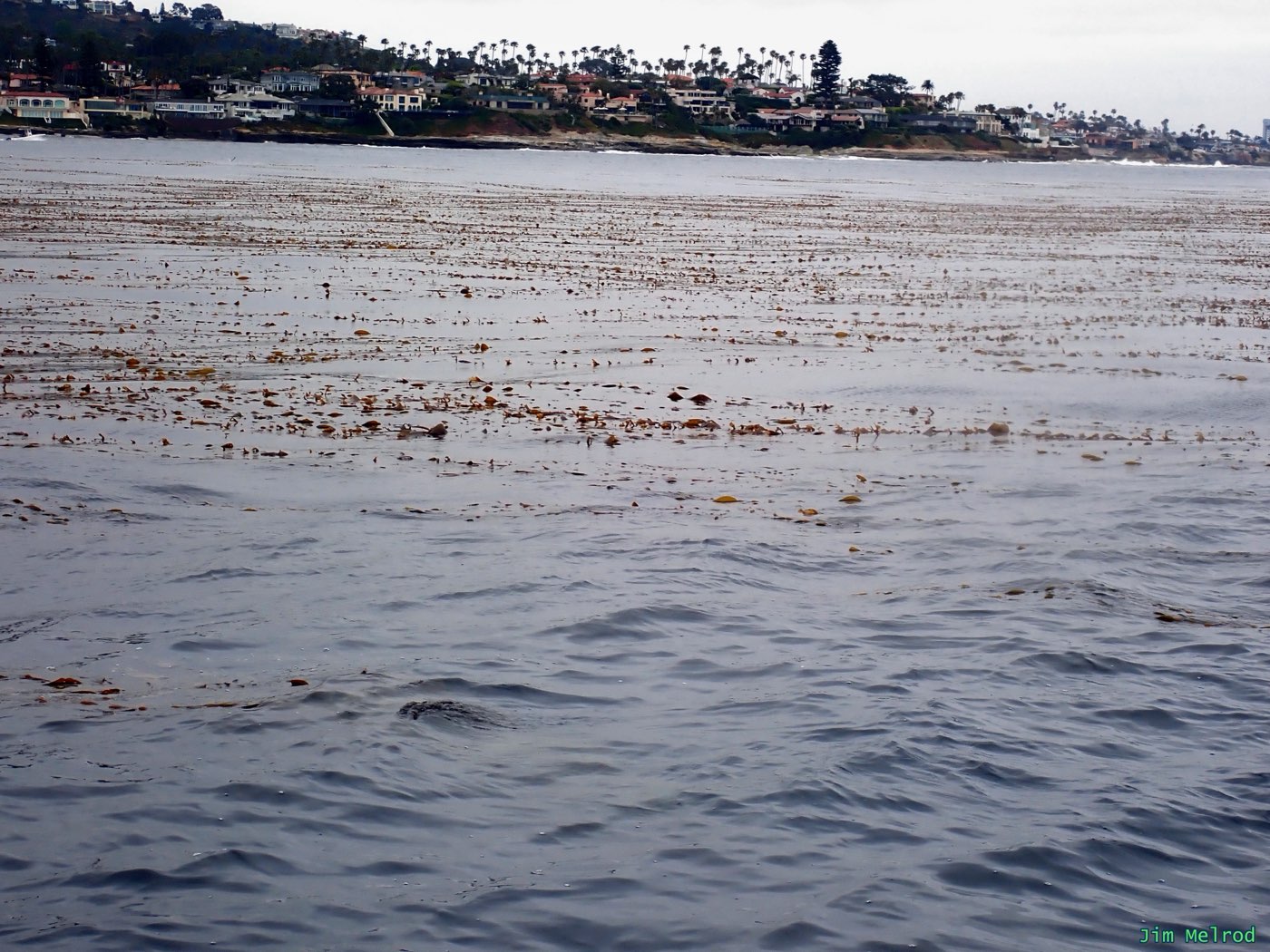
The Point Loma kelp forest is a stand of giant kelp on the rocky inner shelf off the Point Loma peninsula in San Diego, between the entrances to Mission Bay and San Diego Bay, running about ten kilometers along the coast and out to roughly 30 meters of depth. With the La Jolla forest to its north it covers nearly 19 square kilometers, the largest giant kelp forest on the U.S. West Coast, and Scripps Institution of Oceanography has watched it since the 1950s in what may be the longest kelp monitoring record anywhere. It has collapsed and come back more than once. In January 2026 Scripps reported that it is now in a steady, climate-driven decline to the lowest density in its history. It is also where the Marissa runs most of her two-dive days, on rocky reefs and pinnacles from 20 to 114 feet, about a half hour from the dock.
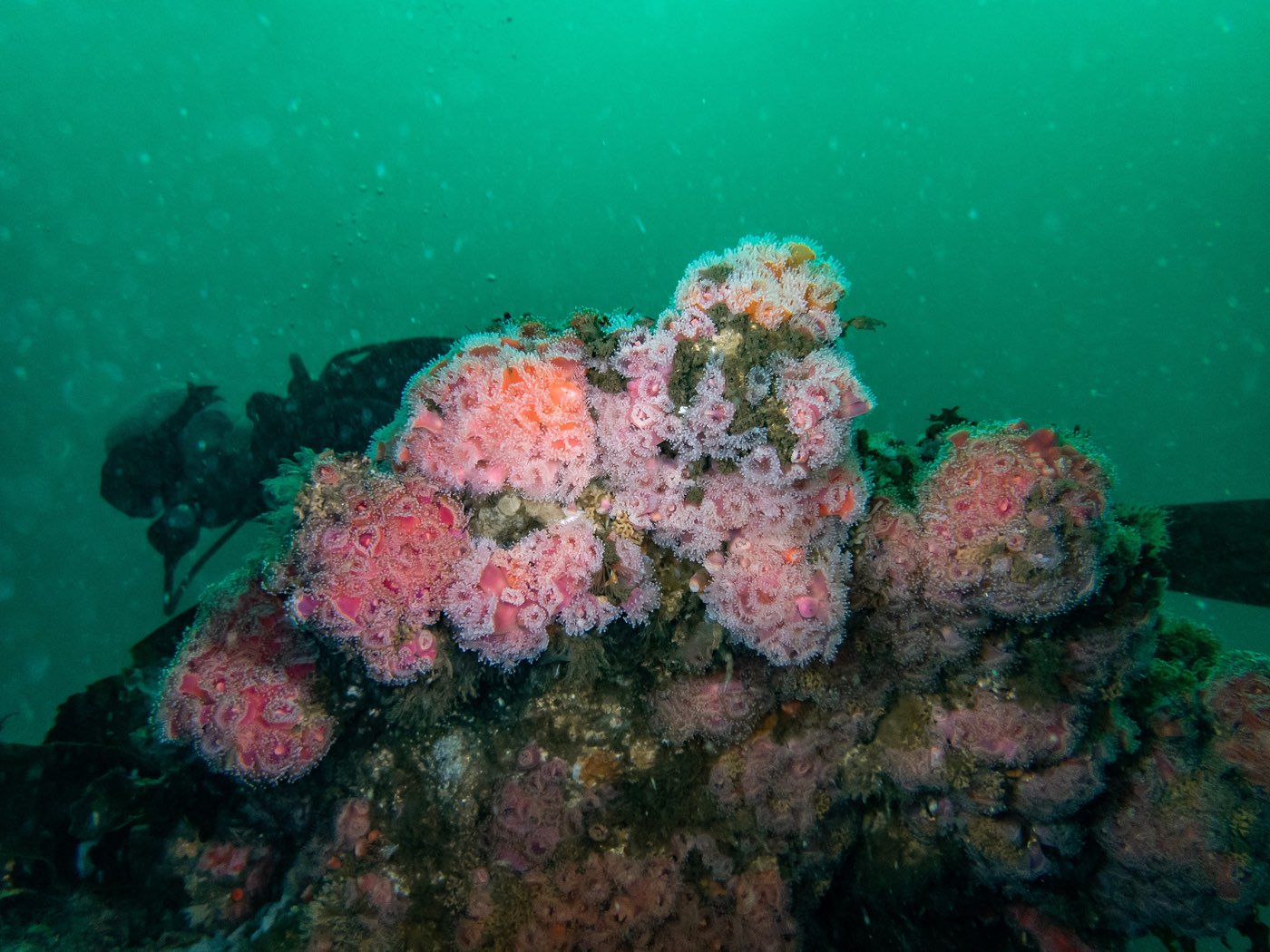
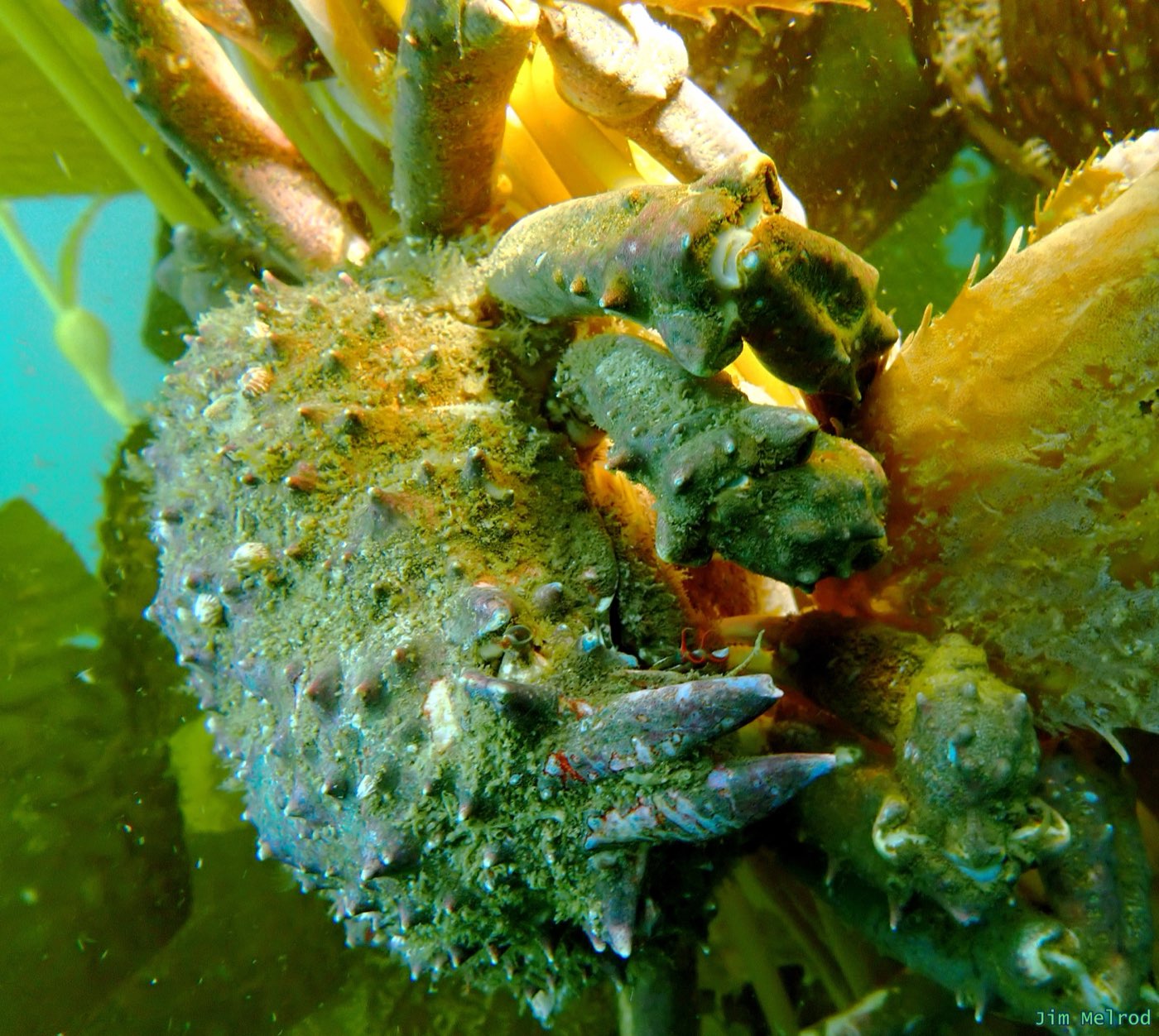
This page is the long version of that story, built from the published science, the City of San Diego's own monitoring reports, the state's fishery records, and the 1999 environmental review for the Yukon project, which mapped this coast in detail. Where the science disagrees with itself, the page says so. Where a claim about the kelp comes from a dive operator, including us, the page says that too. The photographs are from our own trips, by the divers named under each one.
At a glance
| What | A giant kelp (Macrocystis pyrifera) forest on rocky reef |
| Where | Off the Point Loma peninsula, San Diego, between Mission Bay and San Diego Bay |
| Size | About 10 km along the coast, out to about 30 m depth. With La Jolla, nearly 19 km² (7.3 sq mi) |
| Rank | Largest giant kelp forest on the U.S. West Coast |
| Studied since | 1950s (Scripps Institution of Oceanography). Modern permanent-transect program since 1971, expanded 1983 |
| Historic extent | About six square miles before the 1920s |
| Low point | About one hundredth of a square mile in 1961 |
| Recovery | Sewage moved offshore 1963, urchins culled with quicklime 1963 to 1966, canopy up about 75 percent by fall 1967 |
| Worst recent hit | The 2014 to 2016 marine heatwave, adult giant kelp down more than 90 percent at San Diego study sites |
| Now | Lowest recorded density, per Scripps, January 2026 |
| Protection | Cabrillo State Marine Reserve (2012) covers part of the forest. Most of the dive area is outside it and open to fishing |
| Dive depths | 20 to 114 feet across the sites the Marissa runs |
| Water | Plan on 50 to 52°F at depth for most of the year |
Part One: What a kelp forest is, and why one grows here
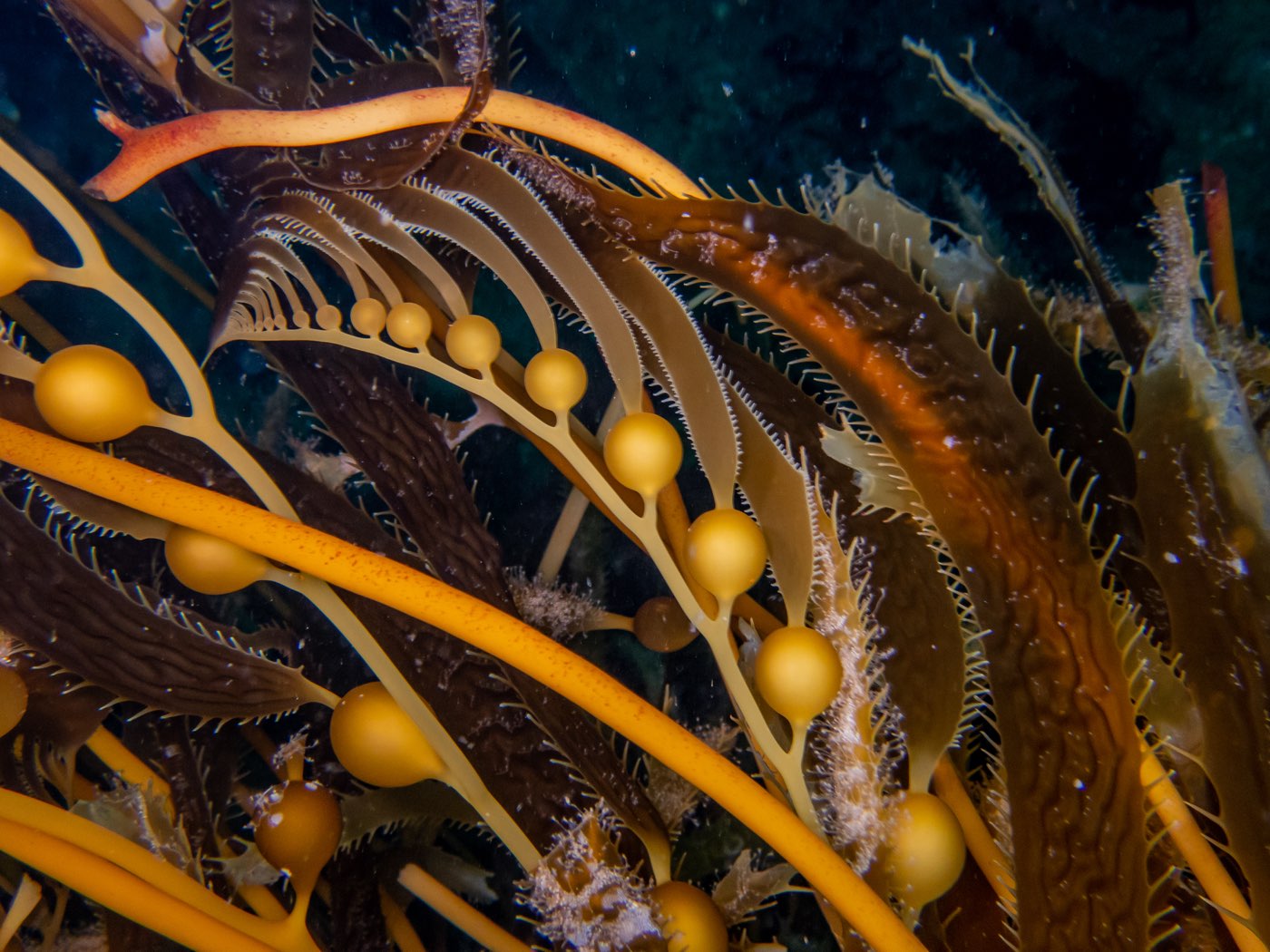
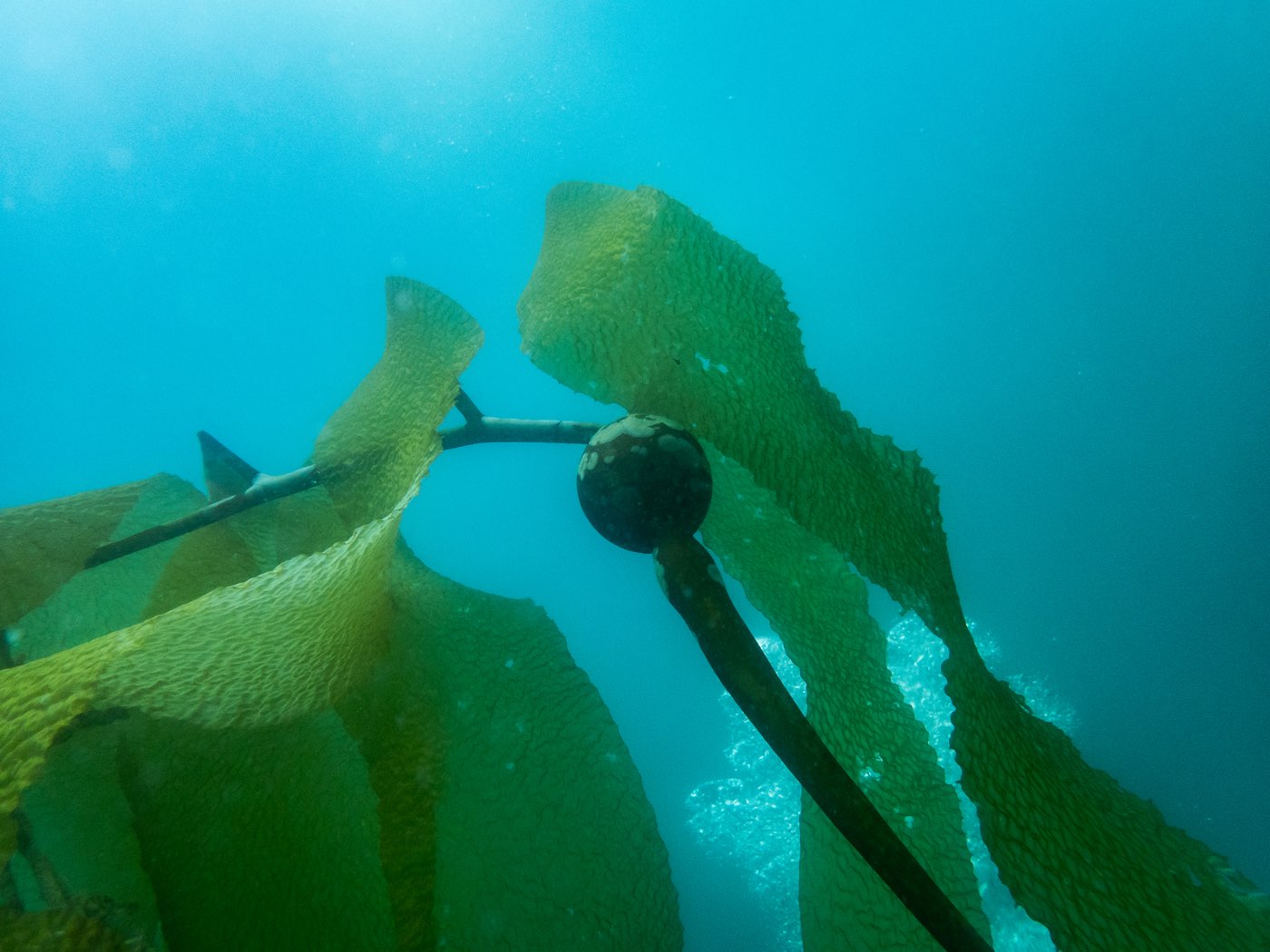
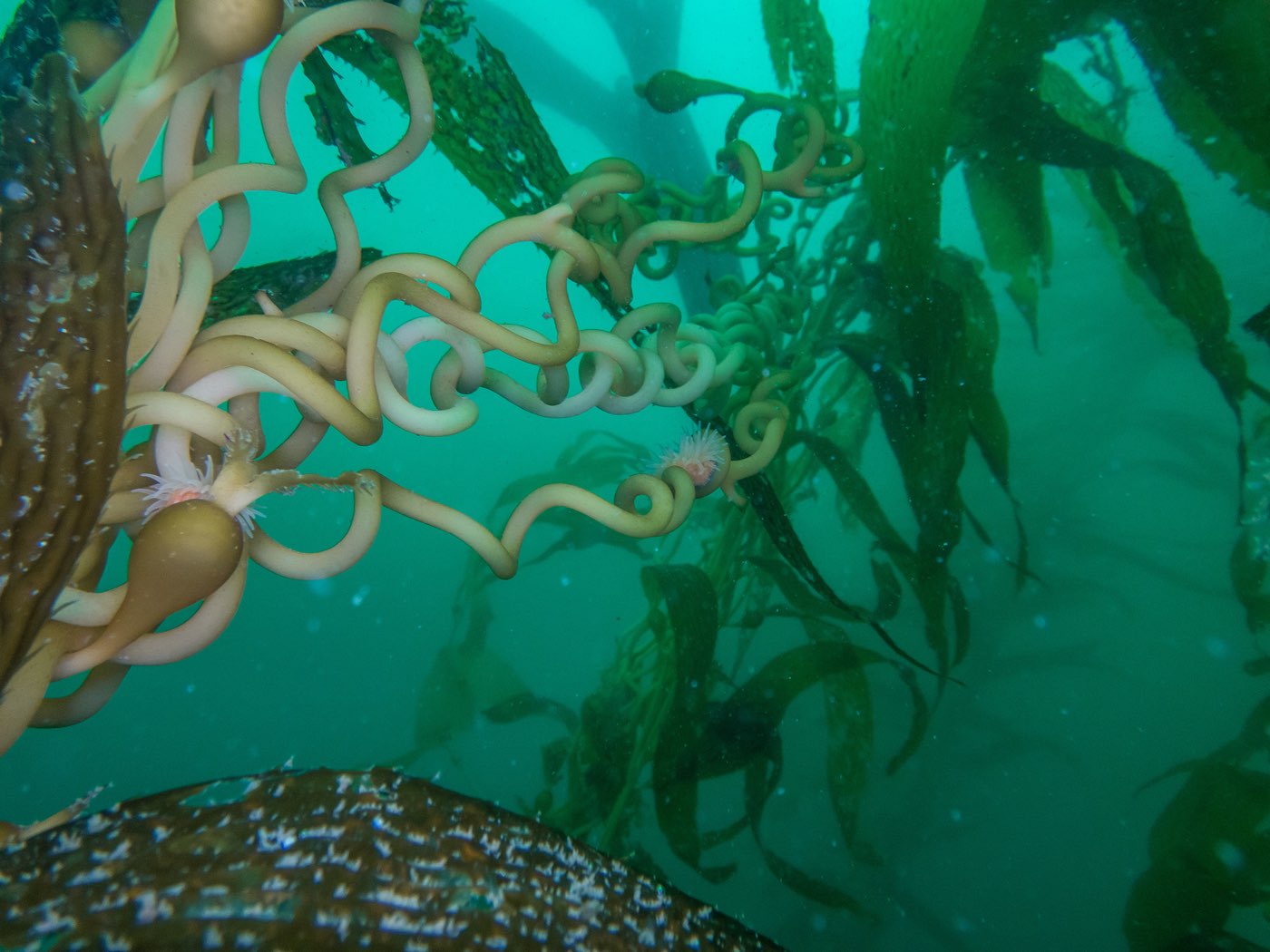
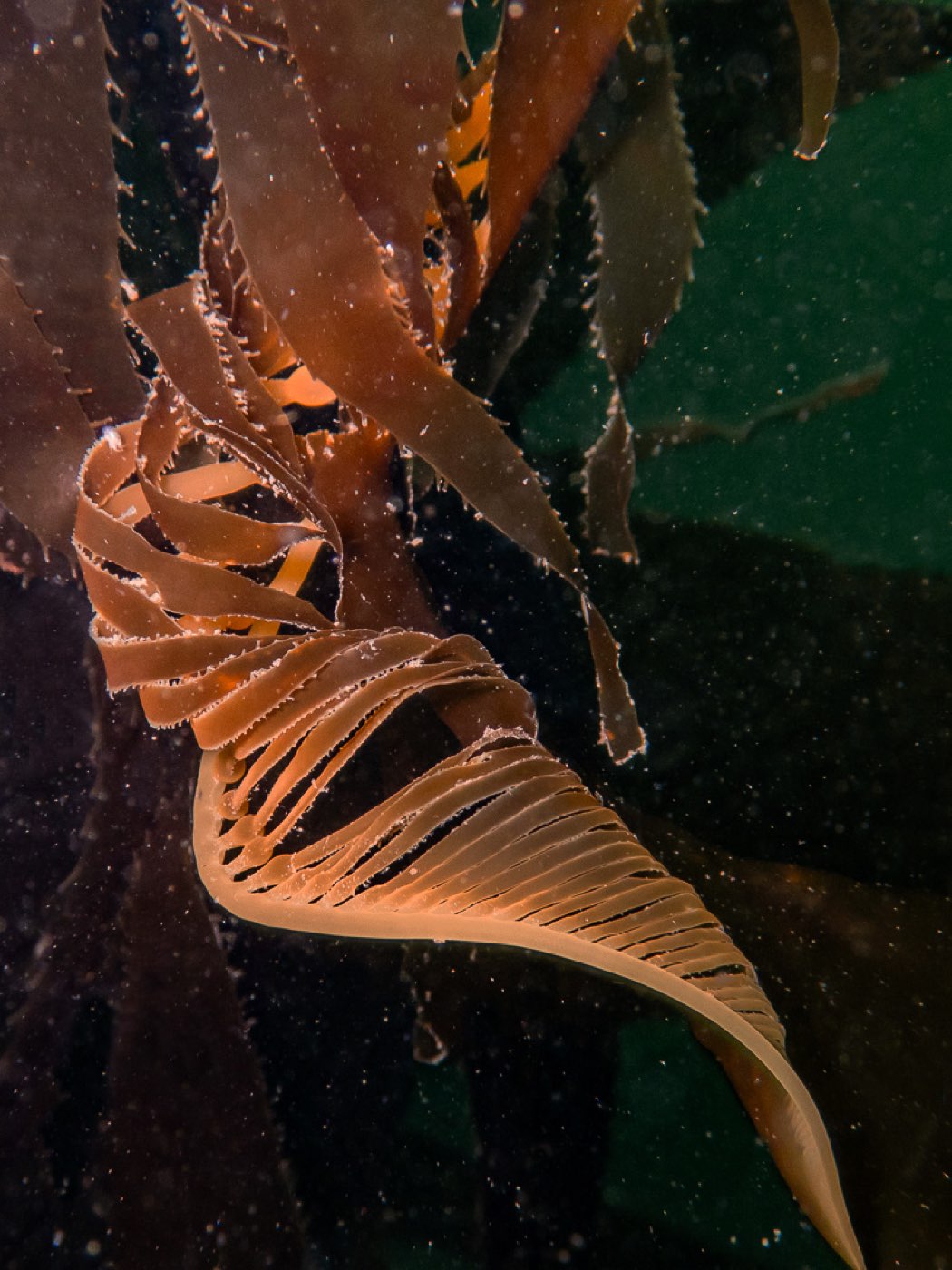
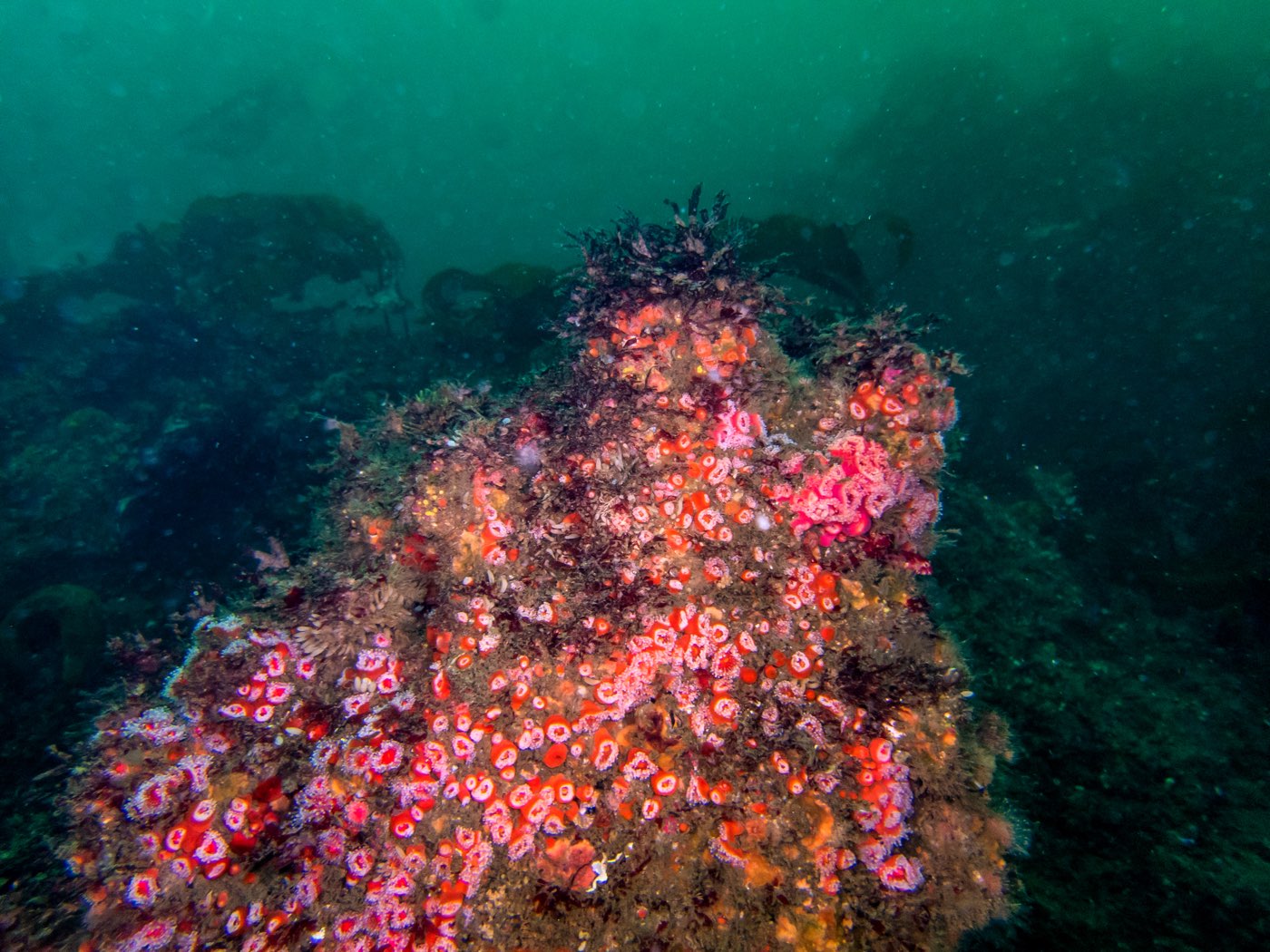
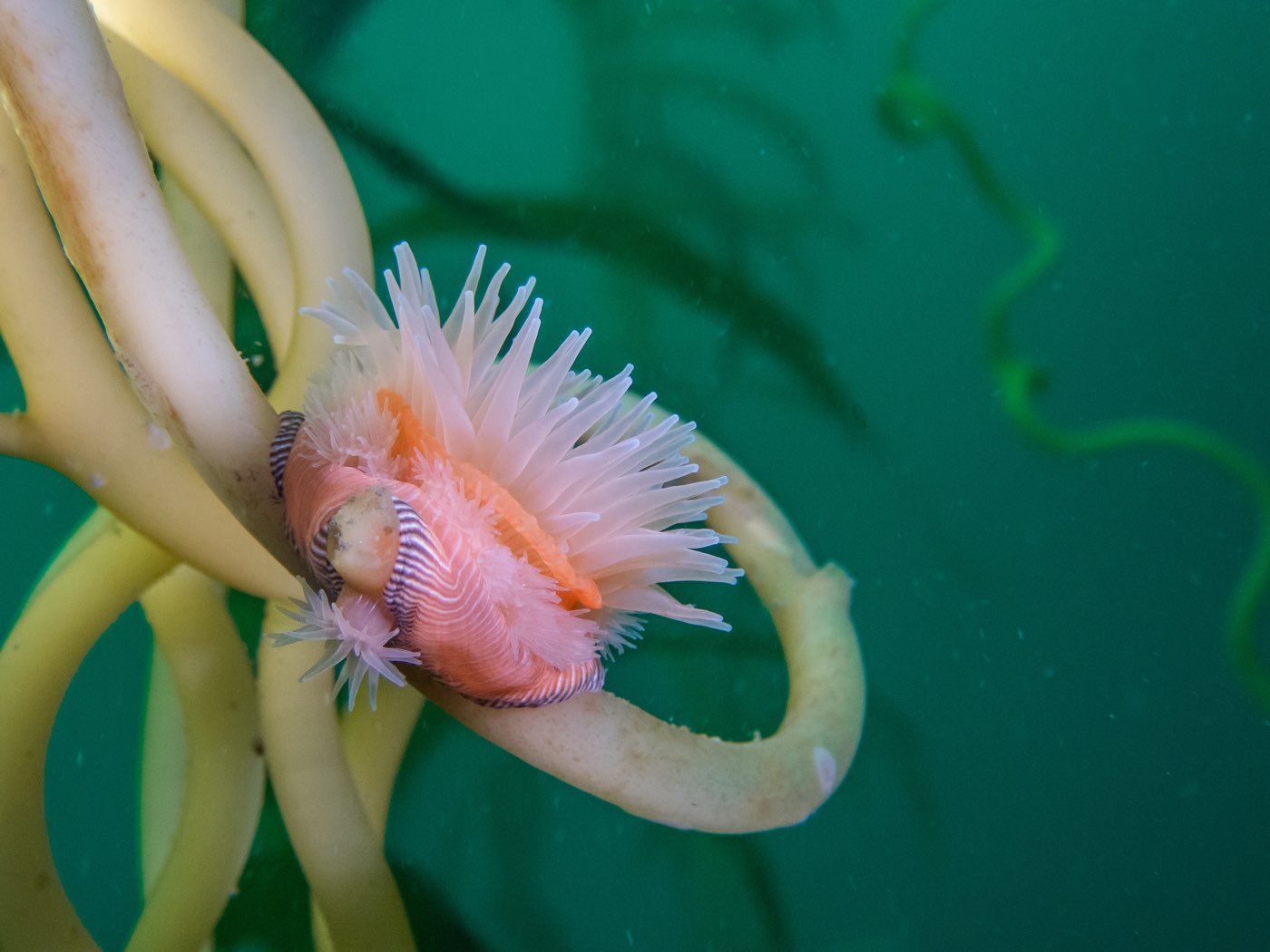
Giant kelp is an alga, not a plant, and it is the fastest-growing large organism in the sea. It anchors to rock with a holdfast, sends up stipes buoyed by gas-filled floats, and spreads a canopy at the surface that can be cropped and regrown within a season. Under the canopy grow the understory kelps, palm kelp and feather boa kelp among them, and beneath those the red and coralline algae that carpet the reef. The whole structure is a habitat: shelter for juvenile fish, a surface for invertebrates, a food supply for grazers, and a windbreak that calms the water inside it.
It is particular about where it will grow. The 1999 environmental review for the San Diego Underwater Recreation Area set out the requirements as the science then understood them: hard bottom to hold a holdfast, water below about 68°F, at least one percent of surface light reaching the bottom, adequate nutrients, ocean salinity, depth of less than about 25 meters, and shelter from extreme water motion. Point Loma has all of them. The peninsula's flanks are rock where most of the San Diego shelf is sand, which is why the kelp stops where the sand starts, at the mouth of the San Diego River to the north and off the Coronado Islands to the south. Off Wreck Alley, about six kilometers north of the forest, the bottom is sand and there is no kelp at all, which is why the HMCS Yukon was put there.
The forest is not a fixed thing. An adult giant kelp plant lives as an adult for less than two years on average. Storms tear plants off the reef, and the inner edge of the forest is set by breaking-wave height. Warm water is poor in nutrients, so El Niño years thin the canopy and La Niña years thicken it. Sand dredged from the two bays in the early twentieth century was carried onto kelp habitat and pinned the forest at both ends. Reading the forest's history means reading those cycles against the things people did to it.
The Point Loma Ocean Outfall runs straight through the forest. Treated wastewater from the Point Loma plant has gone to sea here since 1963, first about two miles out, and since November 1993 through a pipe 4.5 miles long that discharges at about 320 feet, below and beyond the kelp. The City of San Diego and Scripps monitor the forest under that outfall's permit, and that monitoring is the reason so much is known about it.
Part Two: The abalone years (1930s and 1940s)
San Diego is where American sport diving began, and it began on this reef.
In 1933 Jack Prodanovich, Ben Stone and Glenn Orr formed the Bottom Scratchers, widely considered the first organized dive club in the United States. They had no tanks. Initiation into the club meant a breath-hold dive to 30 feet to bring up three abalone on one breath, catching a shark by the tail, and taking a large lobster. Their accounts are the best record of what the reef held before anyone measured it. Member Wally Potts told the San Diego Reader in 1978 that the abalone were so thick "you could throw a nickel out there anywhere and it would land on one." A plaque to the club went up at Boomer Beach in La Jolla in 2025.
Point Loma at that time had the highest pink abalone landings on the California coast. Seven abalone species lived in San Diego waters, and red, pink, green, black and white were all fished commercially. Statewide pink abalone landings peaked in 1952 at more than 1,627 metric tons. The forest itself was at or near its historic size, about six square miles, and it was the most heavily harvested kelp bed in Southern California: Kelco cut the canopy for alginates, the thickeners in ice cream, toothpaste and paint, with a purpose-built ship that mowed the top four feet of the forest up to three times a year.
Part Three: Scripps, scuba, and the men who first swam the forest (1950s)
Scientific diving was born at Scripps Institution of Oceanography in the early 1950s, in this water. Conrad Limbaugh brought scuba to research and formalized it. Andreas Rechnitzer built the Scripps diving program. Jim Stewart, who first put on a mask at La Jolla Cove in 1941 and learned scuba in 1951, joined Scripps in 1952, became its chief diving officer, and trained the first generation of scientific and sport divers before he died in 2017. Los Angeles County's first sport-diver instructor program, in 1953, was seeded by divers trained here. Wheeler North, who would later save the forest, pioneered kelp ecology from underwater rather than from a boat deck.
That is why the Point Loma and La Jolla forests are among the most studied kelp systems on earth. The people who invented the tools for studying kelp did their first work on these reefs, and their successors never stopped.
Part Four: The collapse (1920s to 1961)
After the First World War the forest began to shrink, and it did not stop for forty years. From about six square miles it fell to about one hundredth of a square mile by 1961. Kelco's harvest volumes fell with it.
The causes are argued over, and this page will not settle the argument. The leading peer-reviewed synthesis, Foster and Schiel in 2010, attributes the Point Loma loss mainly to poorly treated sewage discharged into San Diego Bay in the 1950s, to the sediment that came with it, and to the 1957 to 1959 El Niño, one of the strongest of the century, during which the giant kelp very nearly collapsed across Southern California. Urchin grazing was, in that reading, a secondary effect that finished what the water had started. The south end of the forest, off the lighthouse, thinned first.
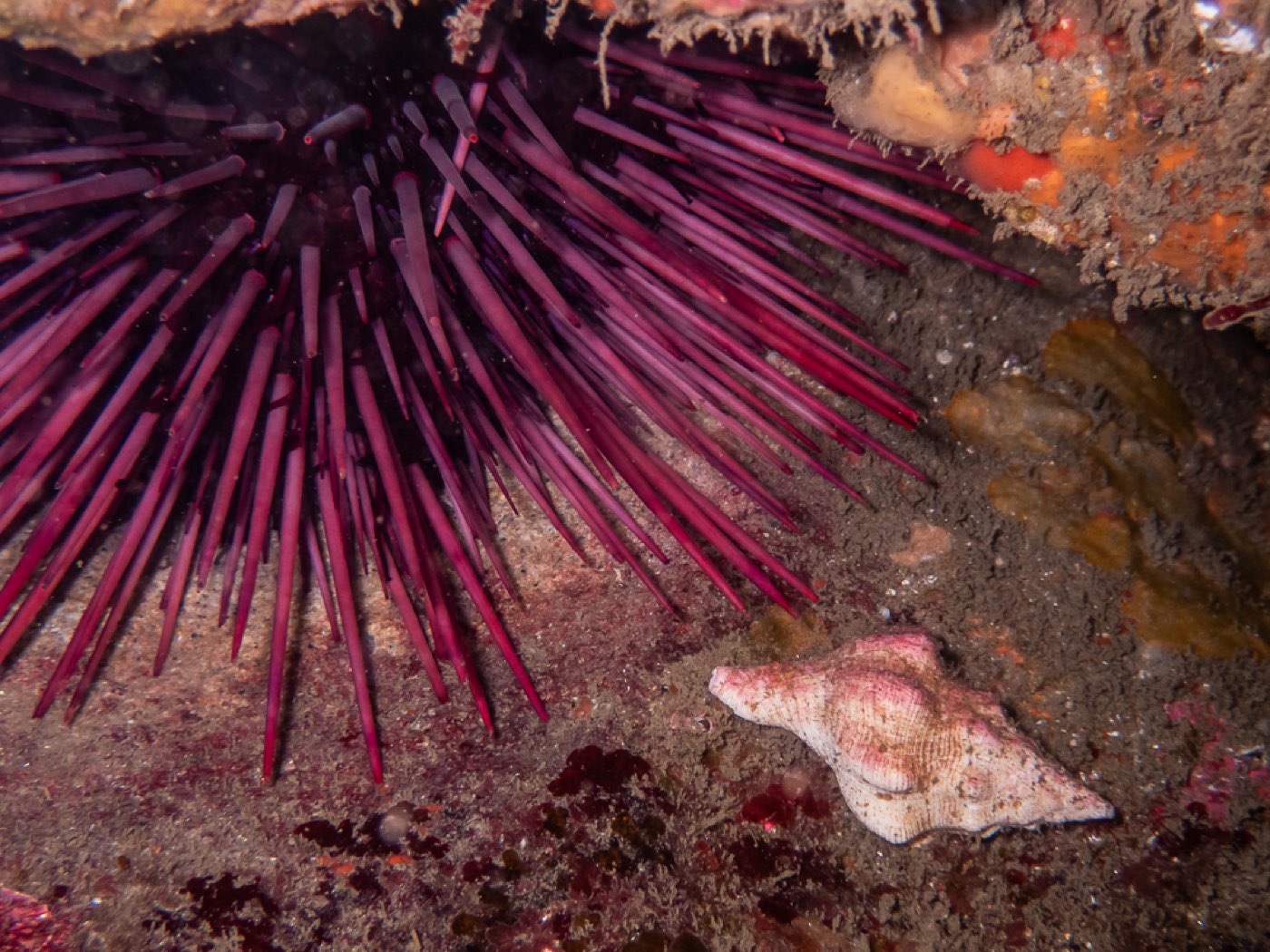
What the divers saw was not in dispute. Scuba surveys around 1960 found red and purple urchins leaving their crevices and forming grazing fronts that moved across hundreds of acres of bare rock, eating every young kelp before it could grow a canopy. Once the canopy was gone the urchins had nothing to hide from and nothing to eat but new recruits, and the barren fed itself.
A note on causation, because it matters for how the forest is managed today. A popular version of this story says fishing out the urchins' predators caused the barrens. Sea otters, the classic urchin predator, had been gone from Southern California since the early 1900s, hunted out in the fur trade, so their absence predates the collapse by decades. The sheephead and spiny lobster that eat urchins here were fished then and are fished now. Foster and Schiel argue there was no broad regional collapse from predator loss in 1950 to 1970, only local losses off urban sewage outfalls in Los Angeles and San Diego. Other scientists weigh the predators more heavily. Both sides agree on the sewage and the El Niño.
Part Five: The engineered recovery (1963 to 1967)
Two things happened at once, and the forest came back.
In 1963 San Diego moved its wastewater discharge from the bay to a deepwater outfall about two kilometers offshore, and in 1967 the discharge of sludge stopped. At the same time Wheeler North's team at the University of California's Institute of Marine Resources, under the Kelp Habitat Improvement Project, went after the urchins directly. Between 1963 and 1966 they dribbled quicklime from a moving vessel in a grid across the barrens, working progressively northward. Quicklime kills an urchin on contact and does little else. Recovery was obvious by 1963 and 1964, and by the fall of 1967 the canopy had expanded by about 75 percent, close to its historic maximum, on the order of 2,320 hectares restored.
It was one of the first large-scale ecological restorations attempted on a coast anywhere, and it worked because it addressed the cause and the symptom together. Urchin culls with quicklime continued in patches into the early 1980s. By the summer of 1982 about 30 hectares of new canopy had developed off south Point Loma that way.
Part Six: Fifty years of watching (1971 to 2013)
Scripps' modern long-term program began in 1971. In 1983 Paul Dayton and the late Mia Tegner expanded it to five permanent sites where kelp and invertebrates are counted on fixed transects, and the program has grown since to some twenty kelp stations off Point Loma plus additional reef and fish sites. Divers have counted the same plants on the same rocks for more than forty years.
The record shows a forest that bends and recovers. The 1982 to 1983 El Niño ripped out established kelp, but the ends of the forest that face longshore currents fared better, because moving water brought them nutrients the still water lacked, and the forest came back. The 1997 to 1998 El Niño devastated it again, and a La Niña that followed started a rapid recovery. Red abalone off Point Loma crashed in the 1980s and did not recover. Underneath the cycles ran a trend: a long-term warming since 1977 that has made the average plant smaller and less productive, because warm water carries less of what kelp eats.
The outfall stayed in the story. In 1988 the Sierra Club and the U.S. Environmental Protection Agency sued the City to force full secondary treatment of its wastewater. Testimony from Scripps kelp researchers helped persuade the court that the upgrade was not needed to protect the forest, and the pipe was instead extended to 4.5 miles and 320 feet in 1993 to keep the plume out of the kelp and out of the water people swim in. The plant still runs under a Clean Water Act waiver, treating about 175 million gallons a day for about 2.2 million people, and the monitoring done under that permit has repeatedly found that the effluent is not what is hurting the kelp.
Part Seven: The animals that vanished
A kelp forest is more than kelp, and several of the animals that defined this one are gone or nearly gone.
Abalone. The fishery moved from species to species as each collapsed: pink, then green, white, black, red. Causes stacked up: serial overfishing, sea otters recovering northward and pushing the fishery south, El Niño die-offs of the kelp the abalone ate, and from the mid-1980s withering syndrome, a bacterial disease that cut some black abalone populations by 99 percent. The black abalone fishery closed in 1993. In 1997 the state closed the entire abalone fishery south of San Francisco to all take, commercial and recreational, and it has not reopened. White abalone were listed as federally endangered in 2001 and black abalone in 2009. Surveys of Point Loma pink abalone in 2004 to 2007 found about 170 per hectare, roughly one animal per 60 square meters, an order of magnitude below the density the state considers the minimum for the animals to find each other and spawn. A 2014 study concluded the Point Loma population cannot sustain itself and probably depends on larvae drifting in from elsewhere. Off Catalina in the early 1970s there had been more than one pink abalone per square meter. If you see an abalone on a Point Loma reef today, look, photograph, and leave it. Taking one is a crime.
Sunflower stars. The largest sea star in the world, up to a meter across with up to 24 arms, a fast predator of urchins, was common off San Diego before 2014. Beginning in 2013, sea star wasting disease caused the largest marine wildlife disease outbreak on record, from Baja California to Alaska. Sunflower stars declined by 80 to 100 percent across a 3,000-kilometer range and are considered functionally extinct from Baja to Washington, with more than five billion animals estimated dead. The species was listed as Critically Endangered in December 2020, and in 2025 researchers identified the cause as a strain of the bacterium Vibrio pectenicida. None has been seen anywhere in San Diego County since 2014. The same epidemic took the giant-spined star and the short-spined star to zero at San Diego study sites, and most sea stars, including the bat star, had not recovered by 2023. In 2024 Birch Aquarium at Scripps spawned sunflower stars in captivity for the first time in California.
Giant sea bass. The apex predator of the kelp, fished to collapse. Commercial catch peaked in 1932, recreational catch in 1963, and landings fell about 95 percent between 1932 and 1980. California closed the fishery in 1981 and banned nearshore gill nets in 1994. Listed as critically endangered in 1996, the species is now recovering: a community-science census estimated about 1,221 adults in Southern California between 2015 and 2022. Our crew sees them at Connor's Canyon and elsewhere, and they are fully protected.
Sea otters. Hunted to near-extinction in the fur trade between 1785 and the 1840s and gone from Southern California by the early 1900s. Their absence for more than a century is one reason the kelp-and-urchin balance here rests on sheephead, lobster and, until 2014, sunflower stars.
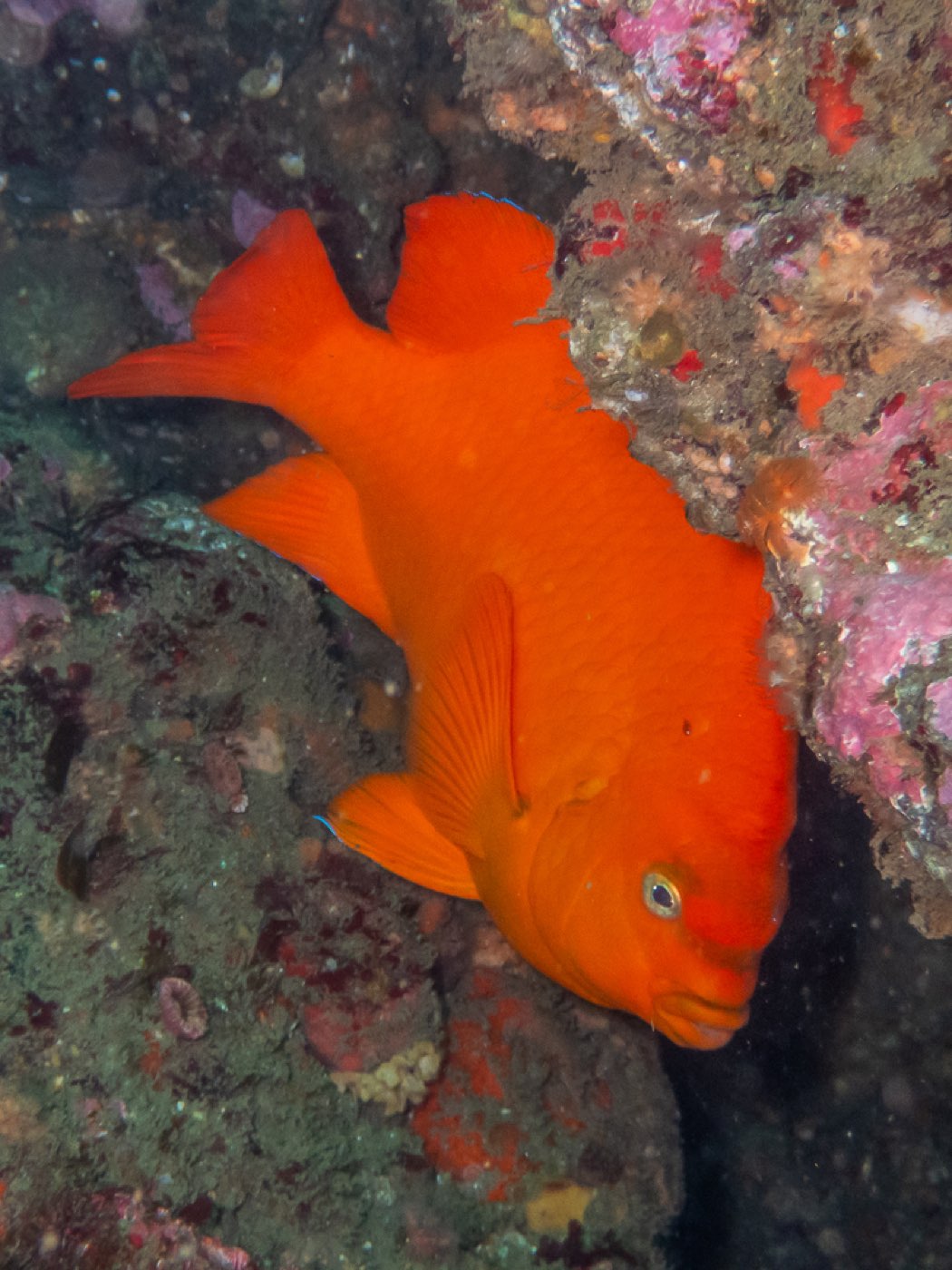
Garibaldi. Not vanished, and worth knowing about. The bright orange damselfish became California's state marine fish in 1995, commercial collection for aquariums was banned from 1 January 1996, and the species is fully protected today. It is the fish most divers remember from the kelp, and there are plenty of them.
Part Eight: The Blob, and the forest now (2014 to 2026)
Between 2014 and 2016 the northeast Pacific ran the longest and warmest marine heatwave in the 115-year temperature record at Scripps Pier, the event scientists called the Blob. Adult giant kelp densities fell by more than 90 percent across the twenty San Diego study sites, and unlike an El Niño the heat also killed the understory kelps that normally hold the reef while the canopy regrows. Some sites held on. Ancient Caverns, one of the reefs we dive, kept its kelp through the 2015 El Niño when the forests around it lost theirs, and Lost City is one of the few that recovered quickly. Most of the forest did not.
The epidemic that killed the sea stars also killed urchins off San Diego in 2014 to 2017, so there was no immediate urchin explosion here of the kind that destroyed more than 90 percent of Northern California's bull kelp. Southern California also still has sheephead and lobster, warm-water urchin predators the north lacks. South Point Loma has a recurring urchin-barren problem all the same, because its topography favors one.
Recovery has been weak and patchy. Despite favorable La Niña conditions from 2021 into 2023, giant kelp off San Diego was at its lowest recorded density in the early 2020s. New summer surface warming, with sea surface temperatures above 28°C, about 3°C above the previous maximums, degrades canopy tissue faster than the plants can replace it. Scripps' 2024 report to the City described a forest held back by warm surface water, competition from understory algae and filter feeders, and periods of low light.
Then, on 28 January 2026, Ed Parnell and colleagues at Scripps published forty years of the permanent-transect data in Ecological Applications. They had tracked about 14,000 individual plants at twenty stations off Point Loma since 1983. Their conclusion was that the forest is no longer in a crash-and-recovery cycle at all. It is in a steady decline that cuts across the cycles, pronounced since 2015, and the cause they name is climate change: warm, nutrient-poor water starving the system.
The forest is not gone. It is patchy, thinner than it has ever been measured, and still the largest of its kind on the coast. Cabrillo State Marine Reserve, created in 2012 under the Marine Life Protection Act, protects a section of it at the southern end. The South La Jolla reserves, also from 2012, protect kelp to the north. Most of the reef the Marissa dives lies outside both and is open to fishing.
Part Nine: What the kelp does for fish, measured
The best local evidence for what a kelp forest is worth to fish comes from the Yukon study, by accident. When Ed Parnell assessed the wreck in 2005 he compared its fish counts to transects he had run in high-relief deep kelp habitat in La Jolla in 2002 and 2003, using the same method. The kelp forest was nearly twice as diverse. Fish diversity scored 2.00 on the Shannon index in the kelp against 1.16 on the wreck, a difference he called highly significant. The kelp was better habitat for kelp bass, barred sand bass, rockfish and sculpin. The wreck was better for cabezon and lingcod. Sheephead liked both. A bight-wide habitat valuation in 1999 had ranked kelp forests first among all Southern California habitats for fish, with shallow artificial reefs second.
Parnell also made the point that the reefs of Wreck Alley, two kilometers south of the La Jolla kelp and six kilometers north of the Point Loma kelp, may work as stepping stones for fish moving between the two natural forests, which is a way of saying the two kelp forests are the source and everything between them is the corridor.
Part Ten: Diving the Point Loma kelp with the Marissa
Everything in this chapter is how the Marissa runs the dive. The live briefing on the boat takes precedence over anything written here.
The sites
Point Loma is where most of our two-dive days go, to rocky reefs and pinnacles generally within seven miles of the dock. The listing names the sites before you book, and the crew makes the final call on the water. The ones we run most, with the depths from our own site records:
| Site | Depth | What it is |
|---|---|---|
| New Hope Rock | 20 to 30 ft | One of the shallowest sites in the forest, good for Open Water divers |
| Donut Hole | 25 to 35 ft | A shallow, easy reef to get around without a guide |
| Briariana's Rock | 50 to 65 ft | Varied topography with a 15-foot overhang full of nooks |
| 3 Fingers Reef | 50 to 65 ft | Three parallel reefs with sand channels between them |
| Chris's Rock | 50 to 70 ft | Zippy surface current some days, worth the swim |
| Lost City | 45 to 55 ft | A reef like a miniature city, one of the few that recovered fast from El Niño |
| Divers Disneyland | 55 to 65 ft | A bit of everything: sand, giant rocks, walls |
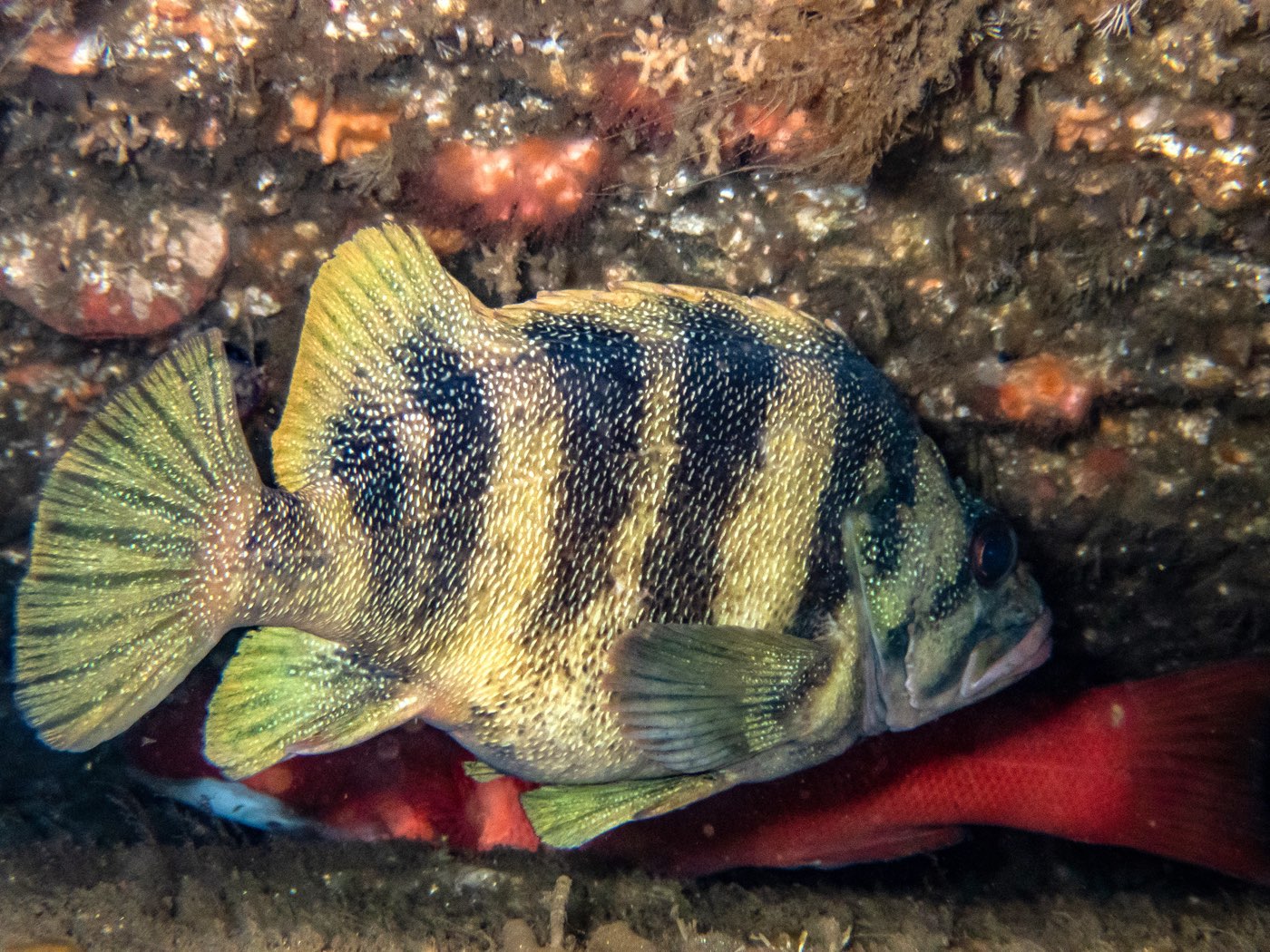
| Treefish Terrace | 55 to 75 ft | Pinnacles along a north-running ridge, an easy dive loaded with life |
| Ancient Caverns | 55 to 65 ft | Cavern-like reef that held its kelp through the 2015 El Niño |
| Green Tank | 60 to 75 ft | Erosion has carved tables into the reef |
| Submarine Seamount | 55 to 75 ft | A reef on a reef, shaped like a submarine |
| Connor's Canyon | 45 to 75 ft | A 45-foot pinnacle in 75 feet of water with a sheer south face |
| High Spot Pinnacle | 45 to 65 ft | A 45-foot pinnacle in 65 feet of water |
| The Ridge | 60 to 80 ft | A rock wall that grows from one foot to thirty as it runs north |
| Strawberry Ledges | 60 to 110 ft | Ledges and macro life, a newer site for us |
| Captain's Mast | 75 to 100 ft | Rocky reef with newly sprouted kelp, caves and cliffs |
| Scout's Out | 75 to 100 ft | Crevices, crags, caves and cliffs |
| Ancient Sea Cliffs | 75 to 100 ft | Believed to be the ancient shoreline of Point Loma |
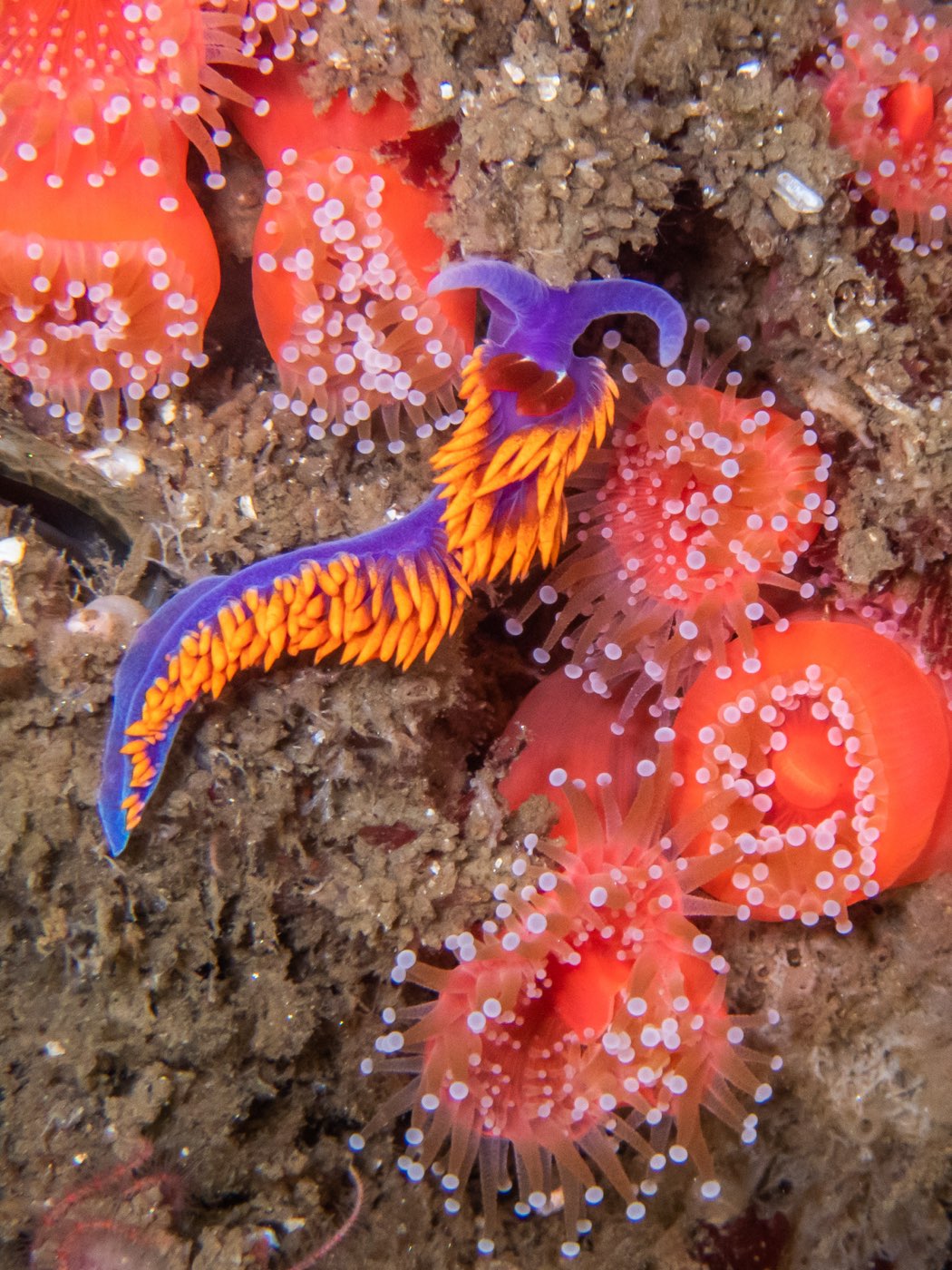
| Anchor Management | 75 to 100 ft | A rarely visited wall with odd rock and nudibranchs |
| Train Wheels | 60 to 100 ft | Named for the set of train wheels on the reef |
Every site has its own page in the dive site directory, and the Point Loma trip page has the price, what the ticket covers and the boarding time.
What you will see, and what we will not promise
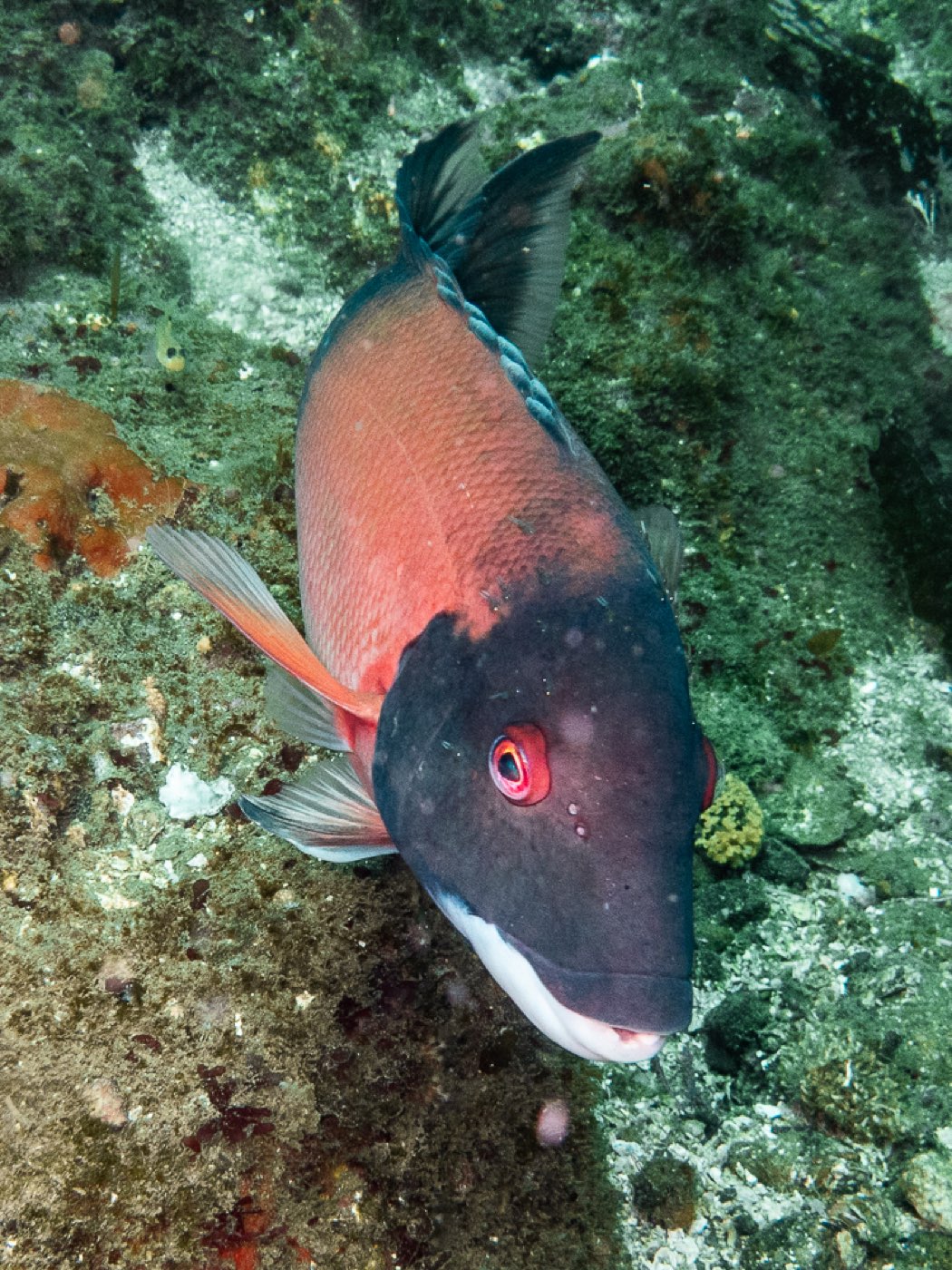
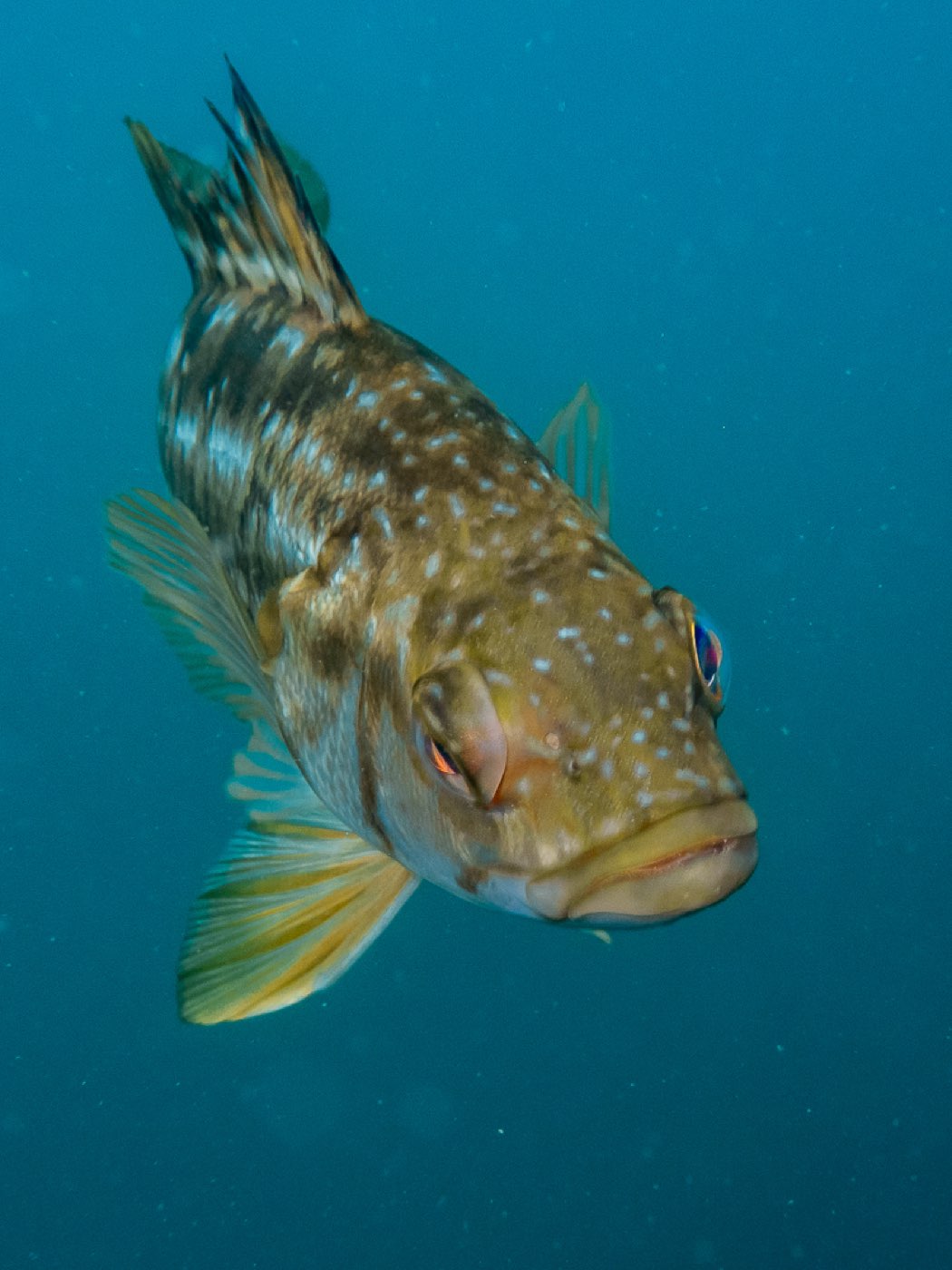
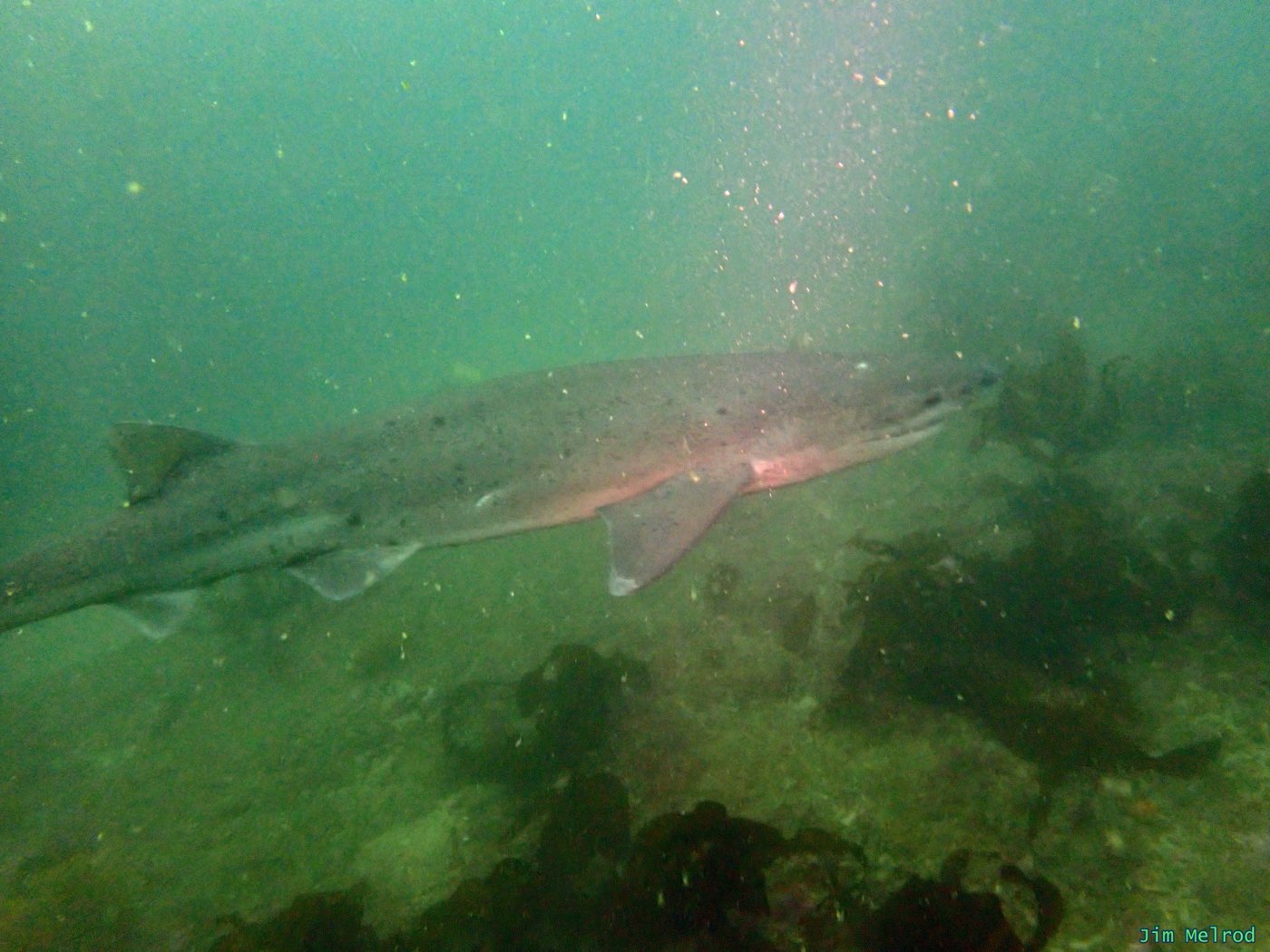
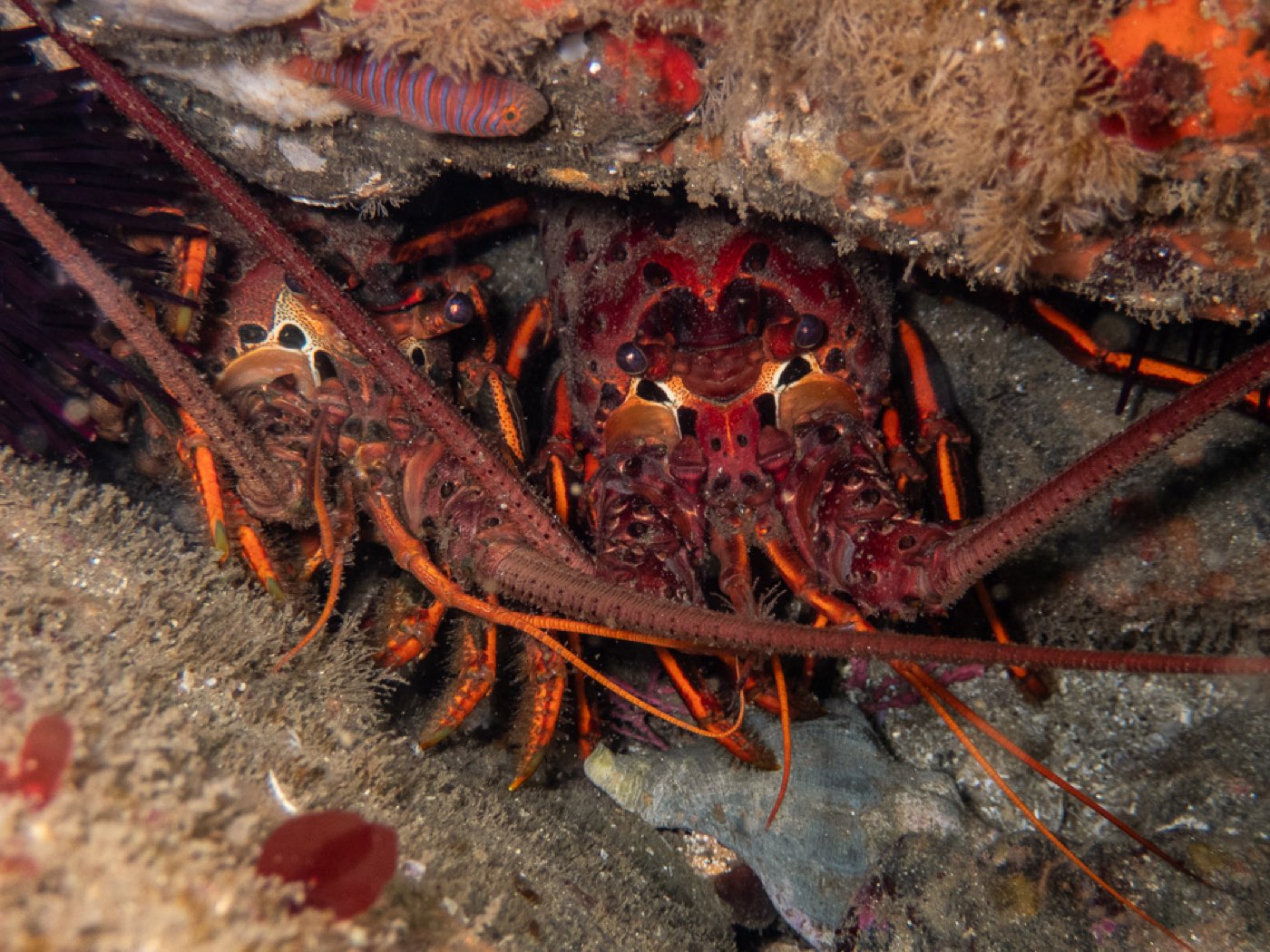
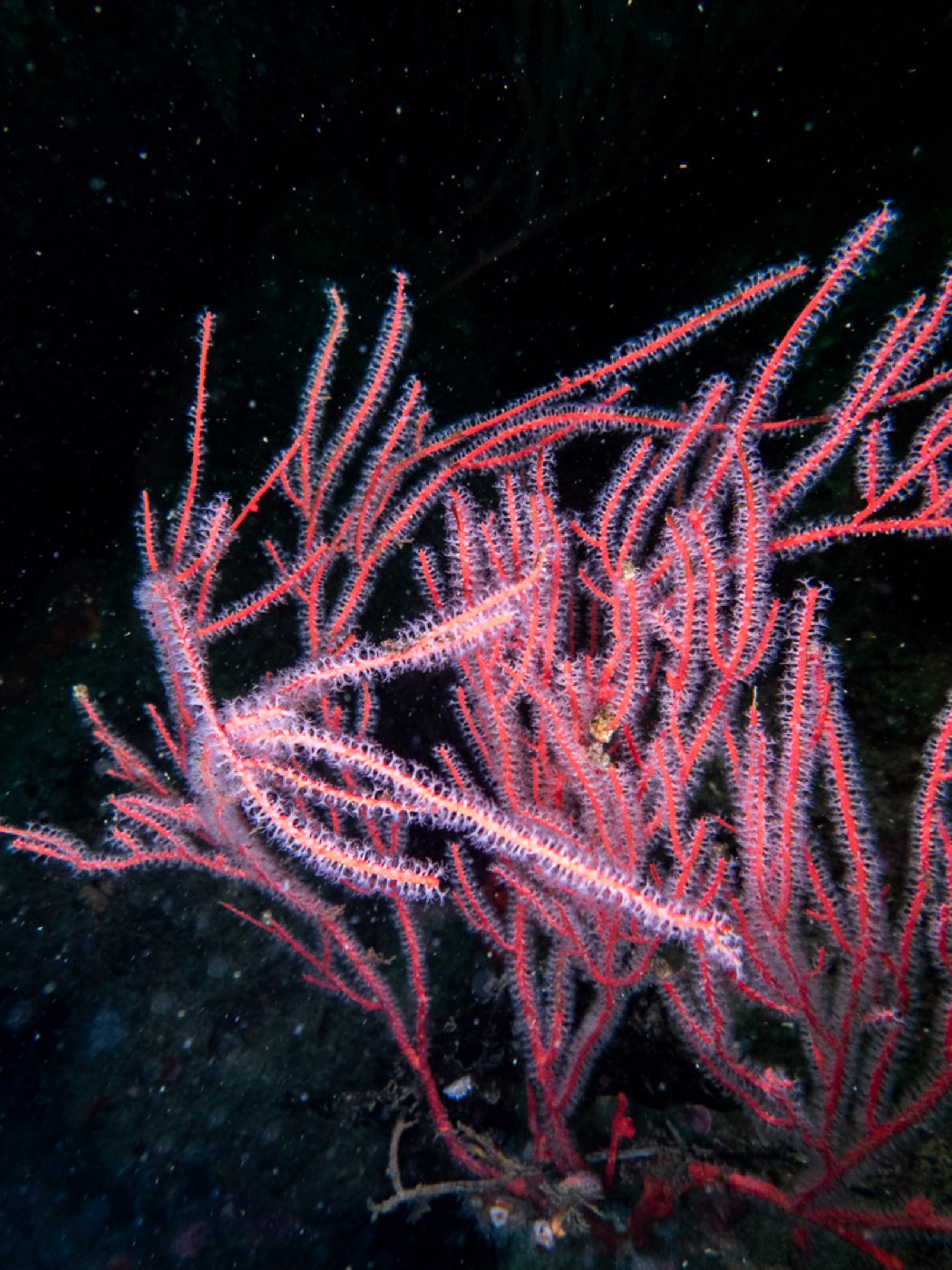
Garibaldi, sheephead, kelp bass and señorita in the water column. Nudibranchs, treefish, sea stars and lobster on the reef. Blacksmith in schools when the canopy is up. Giant sea bass at Connor's Canyon some days. Sevengill sharks pass through in spring at some sites. All of that is what our crew has seen, and none of it is a promise. The kelp itself is thinner than it was, some reefs carry more of it than others, and a site that was a forest in 2012 may be rock and understory this year. We will tell you what the last trip saw. The ocean decides what this one does.
Certification
Several Point Loma sites are Open Water friendly, New Hope Rock, Donut Hole and Treefish Terrace among them. The deeper walls and pinnacles are Advanced Open Water. The trip listing states the requirement for the day, and your card has to be current and match the dive. Not sure a trip fits your card, text Capt Lora at (619) 757-3280 before you book. Weighing a kelp day against the wrecks, Wreck Alley or Point Loma kelp: which first? walks through it.
Kelp needs good buoyancy
A 7 mm suit or a drysuit changes your trim, and sloppy buoyancy in kelp means entanglement. Stay off the bottom, keep hoses and gauges tucked, carry a cutting tool, and if you get wrapped, stop, turn and unwrap rather than kick. Do not grab the kelp to hold position. Coming up through a canopy, ascend slowly with an arm above your head and part the fronds. The crew briefs kelp navigation before the first dive. Visibility in the forest runs anywhere from a few feet to more than 30, and changes week to week.
Lobster season and the reserve
The reef is fished. Lobster traps sit on the bottom from October into March, and the recreational season overlaps it, so expect trap lines on the reef in season and stay off them. If you hunt lobster, the rules are California's: hands only, no nets or hooks, a fishing license and a lobster report card on your person, and legal size measured in the water. The Cabrillo State Marine Reserve at the southern end of the forest is no-take, and the crew will tell you when a site sits inside or beside it. When in doubt, the animal stays.
Getting there
Point Loma trips board at the Mission Bay Sports Center, 1010 Santa Clara Place, San Diego, CA 92109, at 8:00 in the morning. Parking is free. Boarding time is not departure time: we pull off the dock once everyone is aboard, kit is mostly assembled and the briefings are done. The run to the kelp is about half an hour, and a two-dive day is about five and a half hours dock to dock. Water at depth runs 50 to 52°F for most of the year. Bring a 7 mm suit with hood, gloves and boots, or a drysuit if you are trained in one. Choosing between the two is answered at Drysuit or 7 mm wetsuit for diving San Diego?
Diving the Point Loma kelp: questions we get on the boat
- Where is the Point Loma kelp forest?
- Off the west side of the Point Loma peninsula in San Diego, between the entrances to Mission Bay and San Diego Bay, on the rocky inner shelf out to about 30 meters of depth. It runs roughly ten kilometers along the coast. The La Jolla forest to its north is its twin, and together they cover nearly 19 square kilometers, the largest giant kelp forest on the U.S. West Coast.
- How deep is diving in the Point Loma kelp?
- From about 20 feet at New Hope Rock to 114 feet at the deepest ledges we run. Most of the reefs and pinnacles the Marissa dives sit between 45 and 75 feet. The trip listing names the sites and their depths before you book.
- Is the Point Loma kelp forest healthy?
- It is the largest on the coast and it is thinner than it has ever been measured. Scripps Institution of Oceanography reported in January 2026, from forty years of counting about 14,000 individual plants, that the forest is in a steady climate-driven decline rather than its old cycle of crash and recovery, with adult giant kelp down more than 90 percent at San Diego study sites after the 2014 to 2016 marine heatwave. Some reefs hold good kelp and some are rock and understory this year. We will tell you what the last trip saw.
- What happened to the kelp in the 1950s?
- It nearly disappeared. From about six square miles before the 1920s the forest fell to about one hundredth of a square mile by 1961, under poorly treated sewage from San Diego Bay, the sediment that came with it, the 1957 to 1959 El Niño, and urchin grazing fronts that ate every young plant. San Diego moved its outfall offshore in 1963, Wheeler North's team killed the urchins with quicklime from 1963 to 1966, and by fall 1967 the canopy had grown back by about 75 percent.
- Can I take abalone in the Point Loma kelp?
- No. California closed the abalone fishery south of San Francisco to all take, commercial and recreational, in 1997, and it has not reopened. Point Loma once had the highest pink abalone landings on the coast. Surveys in 2004 to 2007 found about one animal per 60 square meters, far below the density the state considers viable. Look, photograph, leave it.
- What marine life lives in the Point Loma kelp forest?
- Garibaldi, California's protected state marine fish, sheephead, kelp bass, señorita, blacksmith and rockfish in the water column and on the reef, with nudibranchs, treefish, sea stars and lobster in the structure. Giant sea bass, protected since 1981 and recovering, turn up at Connor's Canyon. Sevengill sharks pass through some sites in spring. Sunflower stars have not been seen in San Diego County since 2014 and sea otters have been gone for more than a century. None of the animals is a promise.
- What certification do I need for the Point Loma kelp?
- It depends on the site. New Hope Rock, Donut Hole and Treefish Terrace are Open Water friendly. The deeper walls and pinnacles, Captain's Mast, Scout's Out, Ancient Sea Cliffs and Strawberry Ledges among them, are Advanced Open Water. The trip listing states the requirement for the day and your card has to be current and match the dive.
- Is kelp dangerous to dive in?
- Kelp is forgiving if you dive it slowly. Entanglement happens when a diver kicks hard or drags gauges and hoses through the fronds. Keep gear tucked, carry a cutting tool, stay off the bottom, and if you get wrapped, stop, turn and unwrap. Coming up through a canopy, ascend slowly with an arm raised and part the fronds. The crew briefs kelp navigation before the first dive.
- Is the Point Loma kelp forest a marine reserve?
- Part of it. Cabrillo State Marine Reserve, created in 2012, protects a section of the forest at the southern end and is no-take. Most of the reef the Marissa dives lies outside it and is open to fishing, including lobster trapping from October into March. The crew will tell you when a site sits inside or beside the reserve.
- When is the best time of year to dive the Point Loma kelp?
- There is no single best month, and we do not publish one as fact. Water at depth runs about 50 to 52°F for most of the year and colder in late winter. Visibility swings from a few feet to more than 30 and changes week to week. Kelp is thickest when the water is cool and nutrient-rich. The honest answer is the one the crew gives on the day.
- How do I dive the Point Loma kelp with Marissa Charters?
- Point Loma kelp and reef trips are two dives out of Mission Bay Sports Center, 1010 Santa Clara Place, boarding at 8:00 am, about five and a half hours dock to dock. The trip page carries the price and what the ticket covers, and the calendar on the homepage shows the next open seats.
Sources
Science and monitoring
- Parnell, P. E., et al. "Demography and dynamics of giant kelp cohorts across four decades." Ecological Applications, published 28 January 2026. DOI 10.1002/eap.70181.
- City of San Diego and Scripps Institution of Oceanography. Point Loma Ocean Outfall kelp forest monitoring report, 1 April 2024 (Parnell).
- Dayton Lab, Scripps Institution of Oceanography. "Kelp Project History."
- Dayton, P. K., et al. 1992, on the extent and dynamics of the Point Loma forest.
- Tegner, M. J., and P. K. Dayton. 1987, on the 1982 to 1983 El Niño and kelp recovery.
- Foster, M. S., and D. R. Schiel. 2010. Journal of Experimental Marine Biology and Ecology, on the causes of Southern California kelp losses.
- Mearns, Hanan and Harris. Southern California Coastal Water Research Project, 1977, on the outfall history.
- Parnell, Ed. Ecological Assessment of the HMCS Yukon Artificial Reef off San Diego, CA. Scripps, 7 January 2005 (the kelp comparison).
- Bond, A. B., et al. 1999. Bulletin of Marine Science 64(2), the bight-wide habitat valuation.
- City of San Diego. Final Programmatic Environmental Impact Report, San Diego Underwater Recreation Area and the Yukon Project, 3 September 1999 (kelp requirements, canopy history, harvesting).
Abalone, sea stars, sea bass, otters
- California Department of Fish and Wildlife. Abalone Recovery and Management Plan.
- Button, C. A., and L. Rogers-Bennett. 2011. Marine Ecology Progress Series 431:151 to 161.
- Coates, J. H., K. A. Hovel, et al. 2013, Journal of Shellfish Research 32(1), and 2014, Journal of Experimental Marine Biology and Ecology, on Point Loma pink abalone.
- Harvell, C. D., et al. 2019. Science Advances, DOI 10.1126/sciadv.aau7042.
- Gravem, S. A., et al. 2021. Proceedings of the Royal Society B, on the sunflower star decline.
- Prentice, M., et al. 2025. Nature Ecology and Evolution, DOI 10.1038/s41559-025-02797-2, on the cause of sea star wasting.
- Rogers-Bennett, L., and C. A. Catton. 2019. Scientific Reports, on Northern California kelp and urchins.
- Pettit, et al. 2025. Marine Ecology Progress Series 760, the giant sea bass census.
- Larson, et al. 2012, on sea otter history.
Dive history
- San Diego Reader, 1978 and 1987, on the Bottom Scratchers and on Kelco.
- Scripps Institution of Oceanography and UC San Diego, on Limbaugh, Rechnitzer, Stewart and North.
- Marissa Charters dive-site records, 2019 to 2026, for site depths and descriptions.